

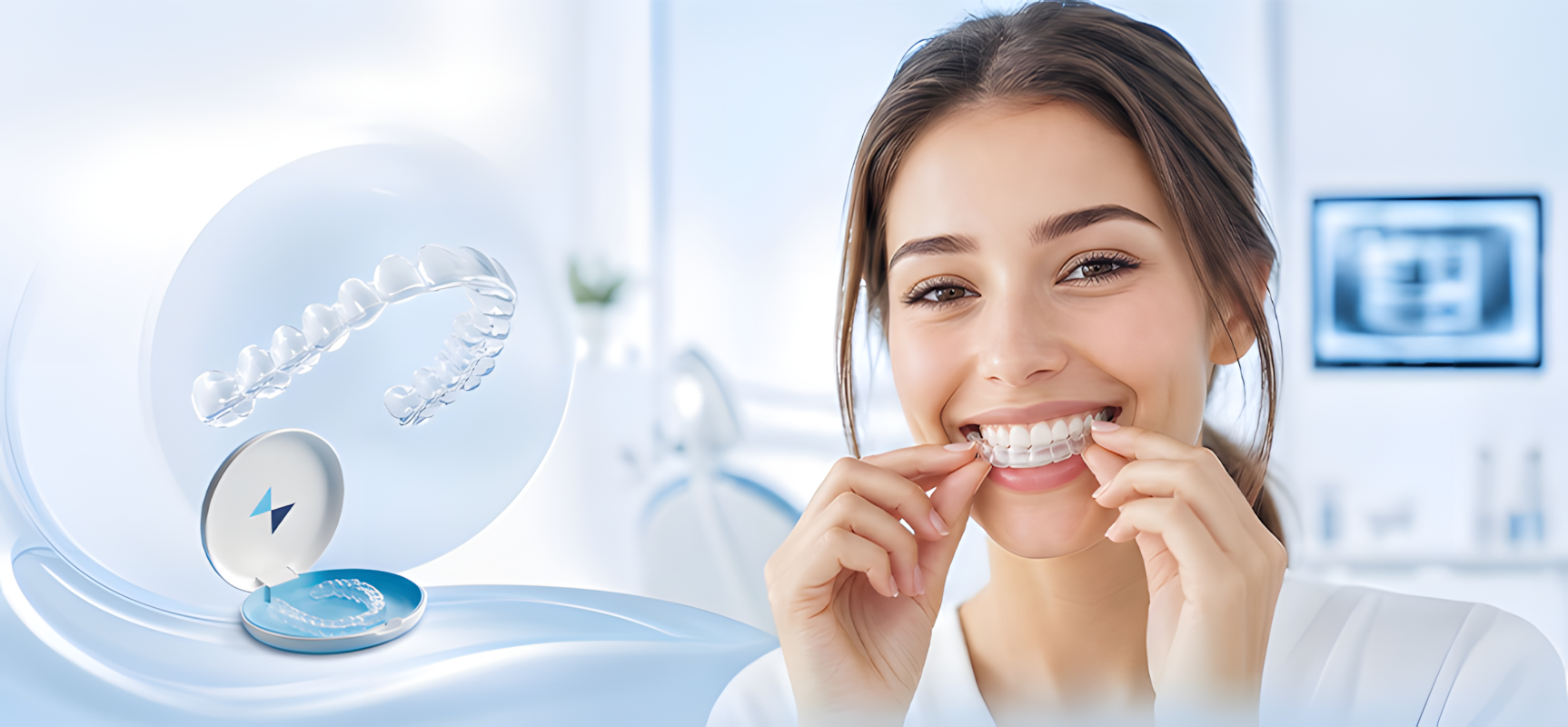
Many people considering orthodontic treatment ask the same question: Are clear aligners painful? While moving teeth naturally causes some pressure, modern clear aligner systems are designed to make treatment far more comfortable than traditional braces.
Unlike metal brackets and wires, which can irritate the cheeks and gums, clear aligners use smooth, removable trays that gradually shift teeth into position with controlled force. Most customers experience mild tightness or soreness for a short time, especially when switching to a new aligner, but the discomfort is usually temporary and manageable.
In this article, we will explore:
- What customers really experience during clear aligner treatment
- Why mild discomfort happens
- How long the soreness usually last
- Ways dentists can help improve customer comfort throughout treatment
What Are Clear Aligners?
Clear aligners are transparent, removable orthodontic trays used to gradually move teeth into their ideal position. Unlike traditional braces, they do not use metal brackets or wires. Instead, customers wear a series of custom-made aligners that apply controlled pressure to the teeth over time.
Clear aligners, such as Sagalign clear aligners, are popular because they combine aesthetics, comfort, and convenience. Their nearly invisible appearance and removable design allow customers to maintain normal eating habits and oral hygiene routines while undergoing orthodontic treatment.
What Customers Really Experience During Clear Aligner Treatment
Most customers describe clear aligner discomfort as pressure, tightness, or mild soreness rather than pain. The sensation is usually strongest during the first few days after starting a new aligner set.
Because aligners move teeth gradually, the pressure applied is controlled and predictable. Many customers adapt quickly and report that discomfort becomes less noticeable as treatment progresses.
Unlike traditional braces, aligners do not have metal components that can irritate the cheeks, lips, or gums, making them a more comfortable option for many customers.
Why do Clear Aligners Cause Temporary Discomfort
1. Tooth Movement Creates Pressure
Orthodontic treatment works by applying controlled force to teeth. Clear aligners gently push teeth into new positions, which can temporarily affect the surrounding periodontal ligament and bone structure.
2. New Aligner Trays Feel Tighter
Each new aligner tray is slightly different from the previous one. When customers switch to a new tray, they may feel temporary tightness because the teeth are beginning another stage of movement.
3. Attachments May Cause Minor Irritation
Some aligner treatments use small composite attachments bonded to teeth to improve movement control. Customers may initially notice these attachments against the lips or cheeks, but most adapt quickly.
How Long Does the Clear Aligner Discomfort Last?
For most customers, discomfort is temporary and mild.
Typical experiences include:
- Mild pressure during the first 24–72 hours of a new tray
- Slight soreness when chewing
- Temporary tightness after reinserting aligners
As customers become accustomed to treatment, many report that each transition to a new aligner feels easier.
Severe pain is uncommon and may indicate:
- Poor aligner fit
- Damaged aligners
- Excessive force
- An attachment issue
In these cases, customers should contact their dentist or orthodontist.
Step-by-Step Customer Experience with Clear Aligners
Step 1: Initial Digital Scan
The dentist captures a digital impression using an intraoral scanner to create a precise treatment plan.
Step 2: First Aligner Placement
Customers receive their first aligners and may notice mild pressure or tightness during the first few hours.
Step 3: Daily Wear Period
Aligners are typically worn 20–22 hours per day. Most customers adapt quickly to speaking and eating routines.
Step 4: Switching to New Aligners
Every 1–2 weeks, customers switch to a new tray that continues tooth movement. Mild soreness may temporarily return.
Step 5: Completion and Retention
After treatment, retainers help maintain the final tooth position and prevent relapse.
Benefits of Clear Aligners for Customer Comfort
1. Smooth and Removable Design
Clear aligners are made from smooth plastic material without metal brackets or wires that may irritate the cheeks and gums. Their removable design also allows customers to eat, brush, and floss more comfortably throughout treatment.
2. Fewer Emergency Visits
Unlike traditional braces, clear aligners do not have wires or brackets that can break or loosen. This reduces the chances of emergency orthodontic visits and helps create a smoother treatment experience.
3. Easier Oral Hygiene
Because aligners can be removed, customers can maintain their normal brushing and flossing routine more easily compared to fixed braces. This helps improve oral hygiene during treatment.
4. More Predictable Pressure
Digital treatment planning allows teeth to move gradually in controlled stages. This creates more consistent force distribution and often improves overall comfort during treatment.
5. Better Aesthetics and Convenience
Clear aligners are nearly invisible, making them a popular option for customers who want a more discreet orthodontic solution. Their removable nature also provides greater flexibility during meals, social events, and daily activities.
Tips to Reduce Clear Aligner Discomfort
Customers can improve comfort during treatment by following several simple recommendations.
1. Wear New Aligners at Night:
Switching to a new aligner before sleep allows customers to adapt during the first several hours.
2. Use Aligners Consistently
Irregular wear can increase tightness and discomfort when aligners are reinserted.
3. Eat Soft Foods Initially
Soft foods may help during the first day of a new tray.
4. Stay Hydrated
Dry mouth can increase irritation and discomfort.
5. Use Orthodontic Wax if Needed
Although uncommon with aligners, wax can help if edges temporarily irritate soft tissues.
Clear Aligners vs Traditional Braces:
|
Feature |
Traditional Braces |
Clear Aligners |
|
Soft Tissue Irritation |
Brackets and wires may irritate cheeks and gums |
Smooth plastic trays are generally more comfortable |
|
Pain After Adjustments |
Tightening appointments may cause noticeable soreness |
Mild pressure usually occurs when switching trays |
|
Emergency Discomfort |
Broken wires or brackets can cause irritation |
Fewer emergency issues during treatment |
|
Eating Comfort |
Discomfort may increase with certain foods |
Aligners are removed during meals |
|
Oral Hygiene Comfort |
Cleaning around brackets can be difficult |
Easier brushing and flossing |
|
Overall Treatment Feel |
More noticeable and restrictive |
More discreet and comfortable for daily life |
When Should Customers Contact Their Dentist?
Although mild pressure and temporary soreness are common during clear aligner treatment, customers should contact their dentist if they experience:
- Severe or persistent pain
- Aligners that do not fit properly
- Sharp aligner edges causing irritation or injury
- Cracked or damaged aligners
- Sudden bite changes or difficulty biting normally
- Loose or detached attachments
Early evaluation helps prevent treatment delays, improves customer comfort, and ensures the aligners continue working as planned.
Frequently Asked Questions
1. Are clear aligners more comfortable than braces?
Many customers find clear aligners more comfortable because they do not use metal brackets or wires that can irritate the mouth.
2. Do clear aligners hurt when first worn?
Customers commonly experience mild pressure or tightness during the first few days of a new aligner tray. This is usually temporary.
3. How long does aligner discomfort last?
Most discomfort improves within 24–72 hours after switching to a new aligner.
4. Can customers eat while wearing clear aligners?
Aligners should generally be removed during meals and drinks other than water.
5. Is pain a sign that the aligners are working?
Mild pressure often indicates that tooth movement is occurring. However, severe pain is not normal and should be evaluated by a dentist.
Sagalign: The most reliable clear aligner in Iraq
Sagalign is a clear aligner system based in Iraq, developed to help dental clinics deliver modern orthodontic treatment with greater comfort, flexibility, and digital precision. Powered by advanced digital workflows and backed by the expertise of 3D Masters, Sagalign combines intraoral scanning, digital treatment planning, and custom aligner manufacturing to deliver a smoother orthodontic experience for both dentists and patients.
Designed for today’s digital dentistry workflows in Iraq, Sagalign focuses on customer comfort, aesthetic treatment, and predictable tooth movement through a series of custom-made removable aligners. The system helps clinics offer clear aligner treatment that is more convenient, discreet, and adaptable to modern customer expectations.
By integrating digital orthodontics with local clinical support and advanced manufacturing technology, Sagalign continues to help dentists across Iraq deliver efficient, customer-friendly clear aligner solutions.
Want to Start Your Pain-Free Clear Aligner Journey?
Contact Sagalign and 3D Masters to learn how modern clear aligner solutions can make orthodontic treatment more comfortable, discreet, and convenient for your customers.