

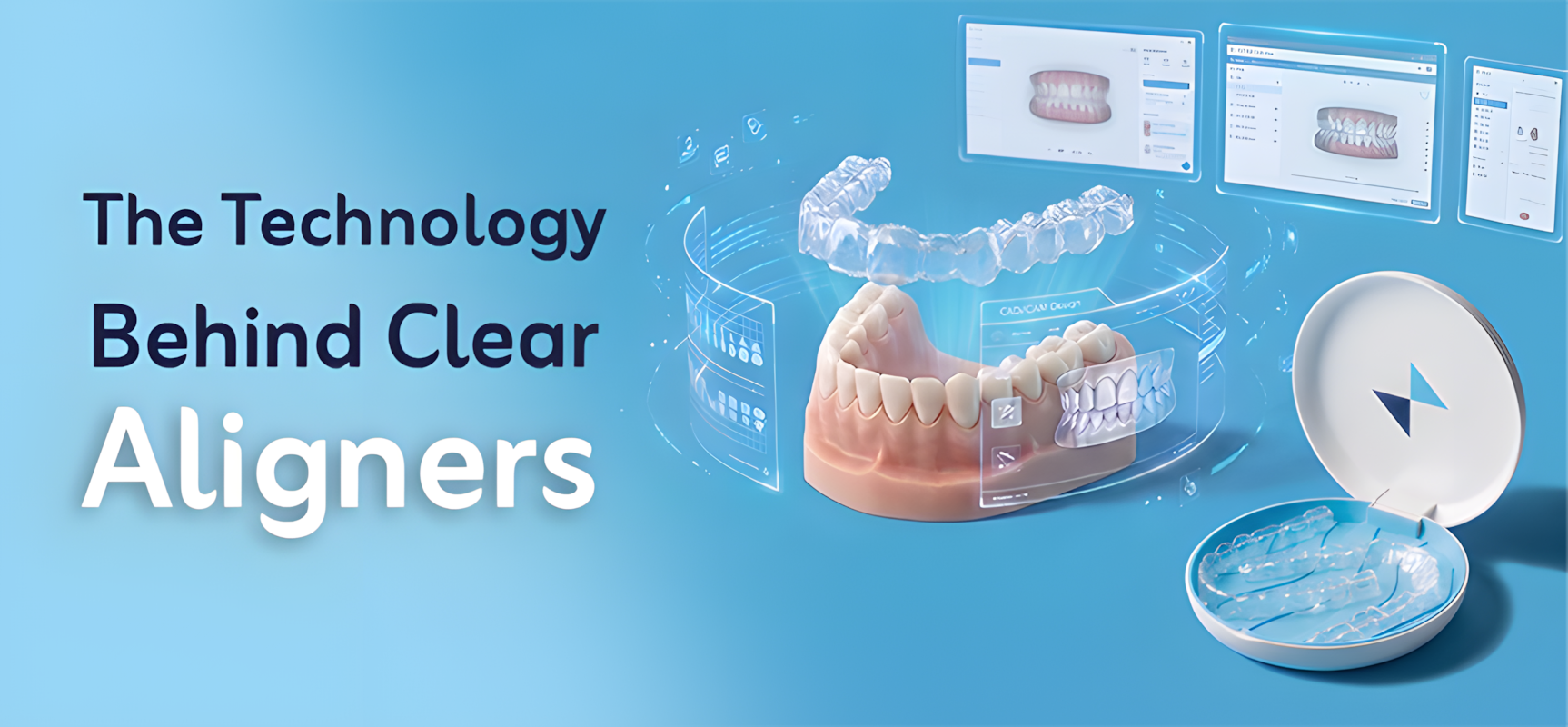
The Technology Behind Clear Aligners: How Digital Dentistry Creates Better Smiles
Many patients choose clear aligners because they are less visible than traditional braces, but the real advantage goes far beyond appearance. The technology behind clear aligners has transformed orthodontic treatment from a largely manual, impression-based process into a precise, digitally controlled workflow. Traditional orthodontics relied on physical molds, manual measurements, and significant trial and error. Today, digital dentistry technologies such as intraoral scanners, 3D treatment simulation software, and computer-aided aligner fabrication have made it possible to plan every stage of tooth movement before treatment even begins. In this article, we explain what those technologies are, how they work together, and why they produce more predictable results than conventional methods.
What Is the Technology Behind Clear Aligners?
Clear aligner technology combines intraoral scanning, 3D treatment planning software, and digital aligner fabrication to move teeth gradually and precisely. A digital scan of the patient's teeth replaces traditional physical impressions. Software then maps out each stage of tooth movement from start to finish, and a full series of custom-made clear trays is produced to carry out that plan, each one moving the teeth a fraction of a millimeter closer to the final result.
In This Article
· Why clear aligner technology represents a shift in orthodontics
· The key technologies involved
· How the digital clear aligner workflow works — step by step
· How digital planning improves treatment outcomes
· Benefits of technology-driven clear aligner treatment
· Digital clear aligner workflow vs traditional orthodontic workflow
· FAQ
Why Clear Aligner Technology Represents a Shift in Orthodontics
Traditional orthodontic treatment is effective, but it depends heavily on the dentist's hands-on adjustments throughout the process. Wire tightening, bracket repositioning, and repeated visits are all part of managing tooth movement in a system that cannot be fully planned. The outcome is guided, but not precisely predicted before treatment starts.
Digital clear aligner technology fundamentally changes this. Instead of adjusting as treatment progresses, the entire movement path is mapped out before the first tray is placed. Every stage of the treatment, from the starting position of each tooth to the final result, is visible in a 3D simulation before the patient commits to treatment. This shift from reactive adjustment to proactive planning is what makes digital aligner technology clinically significant, not just cosmetically appealing.
The Key Technologies Behind Clear Aligners
Intraoral Scanner
Treatment begins with a handheld scanner that creates an accurate 3D model of the patient’s teeth and gums. It replaces uncomfortable physical impressions and provides the digital foundation for treatment planning.
3D Treatment Planning Software
Specialized software uses the scan to plan each tooth movement and preview the expected result. The dentist reviews and approves the simulation, which determines the design of every aligner in the series.
Computer-Aided Aligner Fabrication
The approved plan is converted into digital files used to produce each aligner through 3D printing and thermoforming. Every tray matches a specific stage of tooth movement for precise, controlled treatment.
Attachments and Precision Features
For more complex movements, small tooth-colored attachments may be placed on certain teeth. They help the aligners apply force more effectively and are positioned according to the digital plan.
Retainers and Digital Records
After treatment, the final digital model is used to create retainers. The stored records may also make it easier to produce replacements in the future.
How the Digital Clear Aligner Workflow Works — Step by Step
Step 1: Digital Scan
The dentist uses an intraoral scanner to create an accurate 3D model of the patient’s teeth, replacing traditional impressions.
Step 2: Treatment Simulation
Specialized software maps each planned tooth movement and creates a digital simulation of the treatment from beginning to end.
Step 3: Patient Review and Approval
The patient views the simulation to understand the treatment process and see the expected final result before approving the plan.
Step 4: Aligner Fabrication
The approved plan is sent to the lab, where a personalized series of aligners is produced using precise digital manufacturing.
Step 5: Treatment and Monitoring
The patient changes aligners every one to two weeks and attends regular check-ups so the dentist can monitor progress.
Step 6: Refinements if Needed
If some teeth do not move as planned, a new scan may be taken and additional aligners produced to complete the remaining movements..
Step 7: Retention
After treatment, the patient wears a custom retainer as directed to help maintain the new tooth positions.
How Digital Planning Improves Treatment Outcomes
The predictability of digital clear aligner treatment is one of its most clinically significant advantages. Because every tooth movement is planned and simulated in advance, the dentist can identify potential challenges, such as a tooth that requires a more complex movement, before treatment begins and design the aligner sequence accordingly.
Traditional orthodontic adjustment, by contrast, is more adaptive. The dentist responds to how the teeth are moving and makes corrections as needed. This is effective, but it means the treatment path is not fully known until it is underway. Digital planning removes this uncertainty for straightforward and moderate cases, resulting in more consistent outcomes and fewer unexpected complications.
The quality of the digital scan also plays a role. A highly accurate intraoral scan means the aligner trays fit precisely, applying force exactly where the treatment plan intends. Poor-fitting trays, which can result from inaccurate impressions or fabrication errors that reduce treatment effectiveness and may extend treatment time.
Benefits of Technology-Driven Clear Aligner Treatment
• Full treatment simulation before the first tray is placed; patients know what to expect
• Higher precision than traditional impression-based aligner systems
• Comfortable scanning process, no impression materials required
• Faster communication between clinic and fabrication lab, digital files sent in seconds
• Digital records stored permanently, and replacement retainers available without new impressions
• Attachments and precision features planned digitally for more complex movements
• Refinements handled digitally, no need for physical re-impressions in most cases
• Consistent aligner quality across the entire series as each tray is produced to the same standard
Digital Clear Aligner Workflow vs Traditional Orthodontic Workflow
|
Stage |
Traditional Orthodontics |
Digital Clear Aligner Workflow |
|
Impression taking |
Physical trays and putty material |
Digital intraoral scan — 2 to 5 minutes |
|
Treatment planning |
Manual measurements and plaster models |
3D digital model with software simulation |
|
Patient preview |
No preview before treatment starts |
Patient sees the expected result before committing |
|
Aligner production |
Manual fabrication process |
CAD-designed and digitally fabricated |
|
Adjustments |
New physical impressions may be needed |
Digital refinements sent remotely to lab |
|
File storage |
Physical models take up space |
Digital files stored indefinitely, accessible anytime |
|
Communication with lab |
Physical courier, days of transit |
File transfer in seconds |
|
Accuracy |
Dependent on impression quality |
Consistent precision across every stage |
Frequently Asked Questions
Is the intraoral scan comfortable for patients?
Yes. The intraoral scanner is a small handheld device that moves around the inside of the mouth without touching the teeth with pressure. Most patients find it significantly more comfortable than traditional impression trays filled with putty material, which can trigger a gag reflex and require several minutes of holding still while the material sets.
How accurate is the 3D treatment simulation?
Modern treatment planning software is highly accurate for predicting the outcome of straightforward and moderate cases. For simple tooth movements such as closing gaps or correcting mild crowding, the simulated result closely matches the actual outcome. More complex movements, such as significant rotations or vertical changes, may require refinement steps, as the biological response of each patient's teeth and bone can vary.
What happens if my teeth do not follow the treatment plan exactly?
This is called tracking issues, and it is a normal part of clear aligner treatment in some cases. The dentist identifies the discrepancy during a check-in appointment, takes a new digital scan, and submits a refinement request. New aligners are designed digitally to address the remaining movements. Refinements are a standard part of the digital workflow and do not indicate a failure of treatment.
Can the technology handle complex orthodontic cases?
Digital clear aligner technology works very well for mild to moderate cases including crowding, spacing, gaps, and bite correction. More severe skeletal discrepancies or cases requiring significant vertical movement may still be better suited to traditional fixed appliances or a combination approach. A consultation with a certified aligner dentist will determine which approach is most appropriate for each patient's specific situation.
How long does the digital scan take?
A full upper and lower arch scan typically takes between two and five minutes, depending on the patient's cooperation and the complexity of their dentition. Some clinics also capture a bite registration scan, which adds a small amount of additional time. The entire scan appointment, including review and patient discussion, is usually completed in under 30 minutes.
About Sagalign Clear Aligners
Sagalign is an advanced clear aligner system developed by 3D Masters, Iraq's first digital dental laboratory. Built on a fully digital workflow, Sagalign combines digital treatment planning with custom-made aligners to deliver precise, predictable orthodontic treatment for a wide range of cases.
Today, Sagalign helps certified dentists across Iraq provide modern clear aligner treatment through advanced digital technology, personalized treatment planning, and high-quality aligner manufacturing, creating healthier, more confident smiles with every case.
Ready to Transform Your Smile with Digital Orthodontics?
Contact the Sagalign team to learn how the advanced digital technologies behind clear aligners can help you achieve a more comfortable, precise, and predictable orthodontic treatment experience.